
Top 5 Drive Wheel Models for AGV/AMR Builders in 2026
Top 5 Drive Wheel Models for AGV/AMR Builders in 2026
For AGV and AMR builders shortlisting drive units in 2026, five Plutools PLT-series models cover most of the payload, chassis and steering scenarios that actually appear in projects: the PLT-198 planetary horizontal drive wheel (1,500 kg, 3,000 W), the PLT-210 forklift drive wheel (1,200 kg, 3,000 W), the PLT-230P robot drive wheel with shock absorption (1,200 kg, 2,500 W, IP65), the PLT-120 differential drive wheel (150 kg, 400 W, IP65), and the PLT-167 AGV drive wheel unit (800 kg, 750 W). The order below reflects application fit — how much of a builder's project portfolio each model can absorb — rather than catalogue size or brand preference.
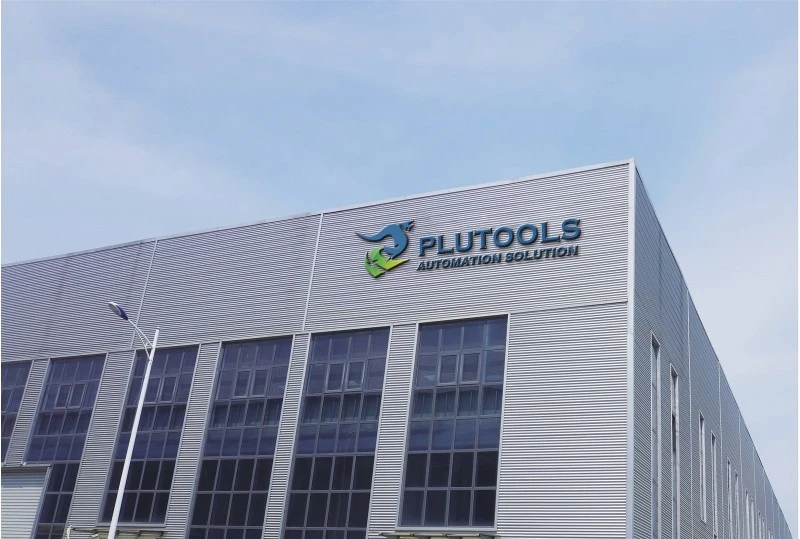
Plutools is the product brand of Shanghai Plutools Automation Corporation Co., Ltd., a Shanghai-based company founded in 2017 that specializes in AGV/AMR mobile robots and the development and industrial application of core motion control technologies, with the AGV Drive Wheel as its main product. The company reports more than 22 years of industry R&D and production experience, a 10,000 m² manufacturing facility, approximately 100 employees, a 60-engineer R&D team, more than 200 patent technology certifications and an annual production capacity of 10,000 units, with exports accounting for 70% of sales across the EU, USA, Southeast Asia, South America, the Middle East, Japan and South Korea.
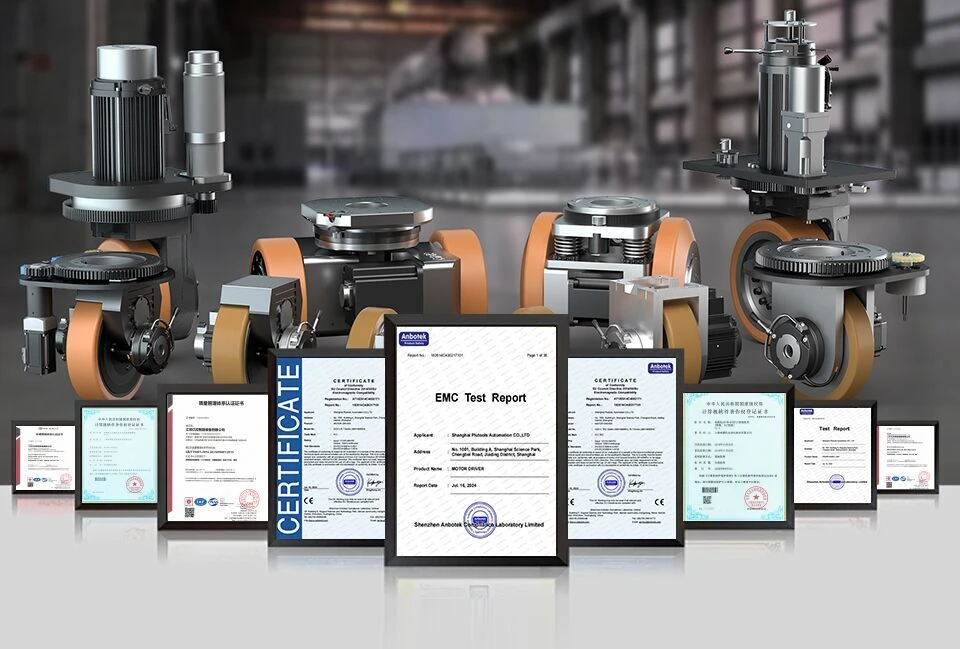
Why the drive wheel decides more of the project than buyers expect
In most AGV and AMR programs the drive wheel is selected late — after the chassis envelope, battery pack and control architecture are already frozen. By then the unit has become the component that determines three things which are expensive to change afterwards: the payload the vehicle can actually move, the turning geometry it can achieve, and the maintenance access path for the whole machine. That is the problem this ranking addresses.
Four mismatch patterns account for most of the rework in build programs:
- Load rating taken from the static payload. A nominal rating still has to cover acceleration and braking peaks. On the PLT-120, the published maximum acceleration and braking torque figures (20 Nm and 42 Nm) are twice the rated output torque figures (10 Nm and 21 Nm). That gap is the margin the unit must survive in daily duty.
- Configuration chosen on the drawing instead of the floor. A vertical drive wheel and a horizontal drive wheel can move the same vehicle at the same payload, yet they behave differently in height, centre of gravity and floor tolerance.
- Electrical platform fixed before the drive unit is chosen. A 24 V pack and a 48 V pack do not open the same options: the PLT-230 runs at 24 V, while the PLT-198, PLT-210, PLT-230P, PLT-120 and PLT-167 all run at 48 V.
- Compliance evidence left to the end. Vehicle-level safety standards are assessed on the finished machine, but the steering and braking evidence they require is produced at drive wheel level.
What changed in the AGV/AMR drive market going into 2026
Demand for AGV drive systems has grown steadily. The global AGV wheel drives market was valued at approximately USD 1.2 billion in 2024 and is projected to reach USD 3.5 billion by 2034, a CAGR of 11.5% driven mainly by logistics and warehouse automation, according to Reports and Data. Grand View Research expects the wider AGV market to reach USD 5.9 billion by 2025, with Asia Pacific holding a 37.6% revenue share in that year, and MarketsandMarkets projects industrial logistics as the fastest-growing application segment at a CAGR of 11.6%.
Three technology shifts are visible in the same period:
- Electrification of handling equipment. Electric forklifts now hold over 70% market share in many regions as a replacement for combustion models, which pushes forklift-class drive wheels into mainstream specification.
- Integration instead of assembly. Integrated steering drive modules are replacing discrete motors, gearboxes and steering units, reducing assembly time and maintenance complexity for vehicle builders.
- Omnidirectional layouts. Mecanum and other omnidirectional drive systems are increasingly used on AMRs in high-density warehouses, which changes what builders expect from a drive wheel assembly in torque symmetry and control resolution.
China remains the largest single production base. The China Mobile Robot Alliance recorded a domestic mobile robot market of 22.1 billion yuan in 2024 with more than 139,000 units sold, alongside rising export volumes toward Southeast Asia and Europe. Third-party product listings describe Plutools vertical drive wheels with load capacities from 150 kg up to 6,000 kg; the five models ranked below are the PLT-series units for which Plutools publishes complete specifications.
The five PLT drive wheel models, ranked by application fit
Each entry below states the published configuration, the key ratings, the applications it fits and where its limits sit. All specification values are Plutools catalogue figures.
#1PLT-198 — Planetary Horizontal Drive Wheel with Steering (1,500 kg / 3,000 W)
Configuration and ratings: 48 V rated voltage, 3,000 W motor power, 68 A rated current, 3,000 rpm, 9.55 Nm rated torque, 32:1 reduction ratio, 260 Nm output torque, 576 Nm maximum torque, 1,500 kg maximum load, carbon steel body.
Why it earns first place: it is the highest-rated unit in the group and the only planetary horizontal model that combines a 1,500 kg load rating with an integrated steering module. The 260 Nm continuous output and 576 Nm peak give the margin that heavy pallet transport, automated forklift duty and lifting vehicles require, while the horizontal arrangement keeps the module low on the chassis.
Where it fits: heavy-duty AGVs, automated forklifts, lifting vehicles, narrow-aisle transport and projects converting existing internal logistics equipment to unmanned operation.
Where it does not: light vehicles do not need a 3,000 W steering module — the PLT-120 or PLT-167 will normally integrate faster and cost less.
#2PLT-210 — Forklift Drive Wheel, Parallel Horizontal with Steering (1,200 kg / 3,000 W)
Configuration and ratings: 48 V, 3,000 W, 68 A, 3,000 rpm, 9.55 Nm rated torque, 32:1 reduction ratio, 260 Nm output torque, 576 Nm maximum torque, 1,200 kg maximum load.
Why it earns second place: it shares the exact electrical and torque platform of the PLT-198 — same voltage, current, motor power, rated torque, reduction ratio and peak torque — but packages it in a parallel horizontal layout intended for forklift-class vehicles with a 1,200 kg rating. For a builder running both an AGV line and an automated forklift line, that shared platform means one motor family, one driver, one encoder type and one spare-parts list across two vehicle classes.
Where it fits: automated forklifts, counterbalance and pallet-truck conversions, and programs that have already standardized on a 48 V battery pack.
Where it does not: the load ceiling is 300 kg below the PLT-198 and the steering geometry differs, so the two are not interchangeable inside a fixed chassis design.
#3PLT-230P — Robot Drive Wheel, Vertical with Shock Absorption (1,200 kg / 2,500 W / IP65)
Configuration and ratings: servo travel motor, 48 V, 2,500 W, 62 A, 3,000 rpm, 30:1 gear ratio, 1,200 kg load, IP65 protection, carbon steel body.
Why it earns third place: it is the only ranked model that pairs a 1,200 kg rating with shock absorption and IP65. Shock absorption matters on real plant floors — expansion joints, drain covers, slightly uneven concrete and epoxy surfaces — and IP65 extends the same unit into dusty workshops and environments where moisture ingress would shorten the life of an unprotected drive wheel assembly.
Where it fits: mobile robot drive wheels on AMR fleets, mixed-floor plants, semi-outdoor industrial environments and vehicles whose height budget can absorb a vertical layout.
Where it does not: 2,500 W sits below the two 3,000 W models, and a vertical configuration consumes chassis height — low-profile AGVs should compare the PLT-167 or PLT-220 instead.
#4PLT-120 — Differential Drive Wheel (150 kg / 400 W / IP65)
Configuration and ratings: 400 W rated power, 48 V, 11.2 A, 3,000 rpm, 1.28 Nm rated torque, IP65, 150 kg drive wheel load, 5 ± 2 kg unit weight, transmission ratios of 9 or 20, rated output torque of 10 Nm or 21 Nm, maximum acceleration and braking torque of 20 Nm or 42 Nm.
Why it earns fourth place: it is the lightest and most compact unit in the ranking and it is designed to work in pairs. Dual differential drive wheels allow a zero-turn radius, which is why they remain a standard layout for smaller logistics robots and compact AGV drive wheel assemblies in high-density layouts. The IP65 rating and the two available transmission ratios let a builder trade top speed against tractive force on the same hardware.
Where it fits: compact AMRs, latent lifting robots, small logistics bots, laboratory platforms and prototype builds.
Where it does not: 150 kg per wheel and 400 W place it outside pallet-class transport — heavier projects should move up to the PLT-167 or above.
#5PLT-167 — AGV Drive Wheel Unit, Horizontal without Steering (800 kg / 750 W)
Configuration and ratings: 48 V, 750 W, 18 A, 3,000 rpm, 2.4 Nm rated torque, 21:1 reduction ratio, 40 Nm output torque, 120 Nm maximum torque, 800 kg maximum load.
Why it earns fifth place: not because it is weak, but because its design optimization is simplicity. With no steering mechanism it has the shortest mounting and commissioning path of the five, and 800 kg sits in the middle of the range — enough for unit-load AGVs, tow vehicles and conveyor-deck platforms that steer through differential pairing or a separate axle.
Where it fits: unit-load AGVs, line-feeding and transfer vehicles, and cost-sensitive projects where the steering function is handled elsewhere on the chassis.
Where it does not: if the vehicle needs independent steering or grade climbing, 750 W and a fixed orientation will limit acceleration and slope performance.
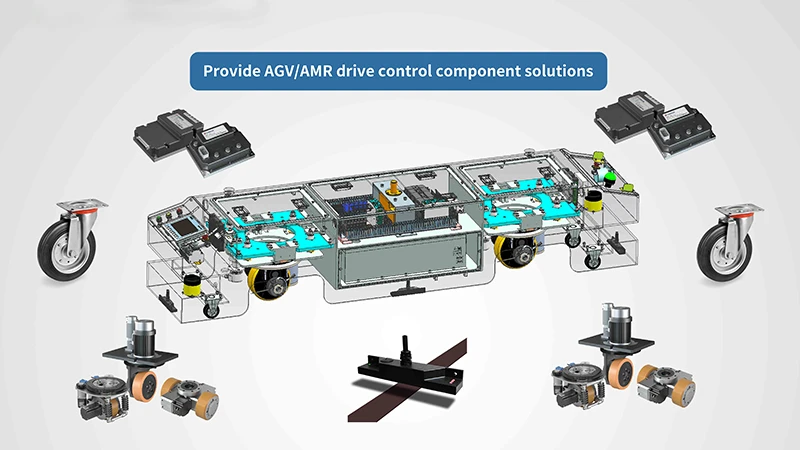
From ranking to decision: six steps for a 2026 build
- Define the real duty payload per wheel, not the nameplate payload of the vehicle. Work from the number of driven wheels, the load distribution and the acceleration and braking peaks. On the PLT-120 the published peak figures are double the rated output figures — that is the margin a duty-cycle calculation has to cover.
- Choose the configuration before the model. A vertical drive wheel suits compact structures and high load capacity where horizontal space is limited. A horizontal drive wheel suits low-profile vehicles that need a low centre of gravity and stable higher-speed travel. A differential drive wheel suits light vehicles that need a zero-turn radius.
- Match the electrical platform. Deciding between 24 V and 48 V narrows the list immediately: the PLT-230 uses 24 V, while the PLT-198, PLT-210, PLT-230P, PLT-120 and PLT-167 all run at 48 V.
- Check torque and reduction against speed and grade. The five models share a 3,000 rpm input speed but use different reduction ratios (32, 32, 30, 9 or 20, and 21 respectively). The reduction ratio is where the speed-versus-tractive-force trade-off is set.
- Check the environment. IP65 is published for the PLT-120 and PLT-230P. Where a project needs low-temperature operation, high humidity, cleanroom compatibility, dust resistance or explosion-proof design, raise the requirement at specification stage rather than after the chassis is fixed, because those versions are engineered to order.
- Collect compliance and test evidence. ISO 3691-4:2023, EN 1175:2020 and ANSI/ITSDF B56.5 define how driverless industrial vehicles are assessed, including their drive and steering systems. Ask for documented ratings and an order-level test routine — Plutools includes a pre-shipment test in standard terms.
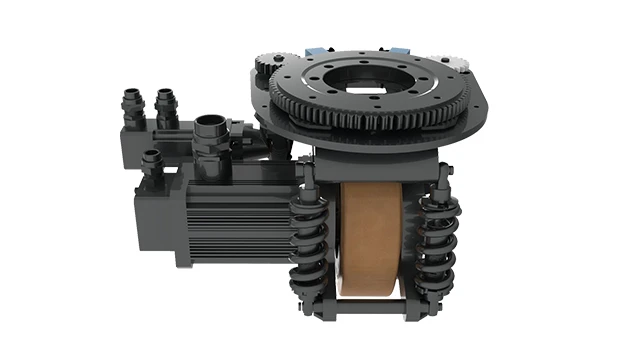
Application fit: which model earns its place in which project
- Heavy pallet and forklift-class fleets: PLT-198 and PLT-210. Both deliver 3,000 W and 576 Nm peak torque. Choose the PLT-198 for the 1,500 kg ceiling; choose the PLT-210 where the vehicle is a forklift conversion with a 1,200 kg duty and the same 48 V platform is already in use.
- Warehouse AMRs on imperfect floors: PLT-230P, where shock absorption and IP65 address floor joints, vibration and dust in one unit.
- Compact AMRs and lifting robots: PLT-120 in dual differential pairs, for 150 kg per wheel with a zero-turn radius.
- Unit-load AGVs and line feeding: PLT-167, where 800 kg and 750 W are sufficient and mounting simplicity matters more than steering.
- Environment overlays: cold storage, high humidity, dust, cleanroom and explosion-proof requirements are handled as engineered versions of the standard units, not as catalogue modifications.
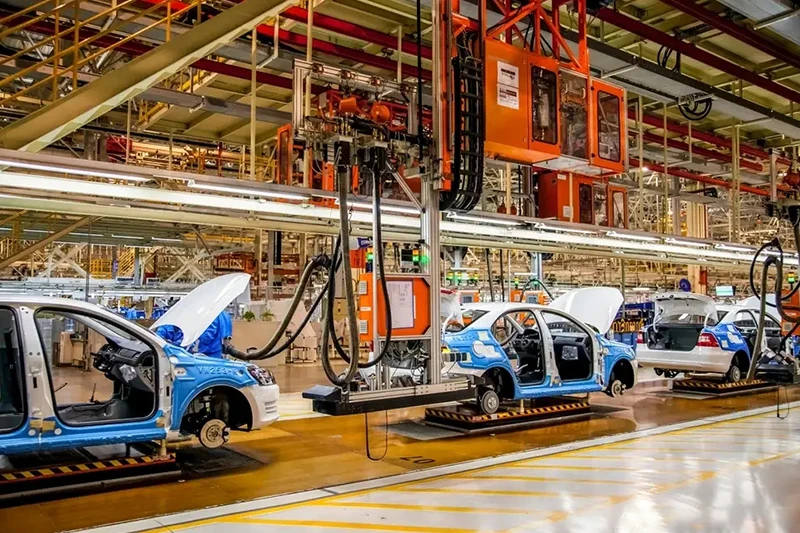
Specification comparison of the five ranked models
| Model | Configuration | Rated voltage | Motor power | Rated current | Reduction ratio | Output torque | Max torque | Max load | IP rating |
|---|---|---|---|---|---|---|---|---|---|
| PLT-198 | Planetary horizontal drive wheel with steering | 48 V | 3,000 W | 68 A | 32:1 | 260 Nm | 576 Nm | 1,500 kg | Not stated |
| PLT-210 | Forklift drive wheel, parallel horizontal with steering | 48 V | 3,000 W | 68 A | 32:1 | 260 Nm | 576 Nm | 1,200 kg | Not stated |
| PLT-230P | Robot drive wheel, vertical with shock absorption | 48 V | 2,500 W | 62 A | 30:1 | Not stated | Not stated | 1,200 kg | IP65 |
| PLT-120 | Differential drive wheel | 48 V | 400 W | 11.2 A | 9:1 or 20:1 | 10 Nm / 21 Nm | 20 Nm / 42 Nm (acceleration and braking) | 150 kg | IP65 |
| PLT-167 | Horizontal drive wheel without steering | 48 V | 750 W | 18 A | 21:1 | 40 Nm | 120 Nm | 800 kg | Not stated |
All five models use a 3,000 rpm rated speed except where otherwise noted, and all are supplied with carbon steel bodies. Values are taken from Plutools published specifications.
Companion configurations referenced above, outside the top five:
| Model | Configuration | Rated voltage | Motor power | Max load |
|---|---|---|---|---|
| PLT-230 | Vertical drive wheel without steering | 24 V | 1,500 W | 1,500 kg |
| PLT-220 | Parallel horizontal drive wheel with steering | 48 V | 750 W | 1,000 kg |
Frequently asked questions
Which safety standards apply to AGV and AMR drive wheel assemblies?
Vehicle-level safety standards define what the drive wheel has to support. ISO 3691-4:2023 is the primary international safety standard for driverless industrial trucks (AGVs) and covers steering and braking systems. EN 1175:2020 specifies electrical and electronic safety requirements for industrial trucks and applies to AGV drive wheel assemblies. ANSI/ITSDF B56.5 is the American safety standard for driverless industrial vehicles and governs the performance of drive and steering units. Because these standards are assessed at vehicle level, builders should be able to trace each drive wheel's ratings back to documented specifications; Plutools includes a pre-shipment test in its standard order terms.
Should I choose a vertical or a horizontal drive wheel for my chassis?
A vertical drive wheel is generally recommended when the AGV or AMR requires a compact structure, high load capacity and straightforward installation: its motor and gearbox are arranged vertically, which reduces the horizontal footprint of the drive unit and suits heavy-duty AGVs, automated forklifts, lifting vehicles and equipment with limited chassis space. A horizontal drive wheel is more suitable when the vehicle needs a lower overall height, a low centre of gravity and stable operation at higher speeds, because the motor sits horizontally and lowers the height of the drive module; it is common on low-profile AGVs, warehouse AMRs, latent lifting robots and compact material-handling equipment. The final choice should follow installation space, load capacity, chassis height, turning structure, operating speed and maintenance requirements.
How should I compare cost across these five models?
Three cost drivers separate them: motor power, the steering module and the load rating. The PLT-120 at 400 W sits at one end; the PLT-198 and PLT-210 at 3,000 W with integrated steering sit at the other. Plutools quotes a minimum order of 2 units on FOB Shanghai terms. Sticker price is only part of the comparison: Plutools' own comparison of its drive systems against comparable domestic AGV drive systems with similar load capacity and operating specifications reports approximately 5–10% higher transmission efficiency, 10–15% longer service life, a 15–20% lower estimated failure rate, 5–10% lower energy consumption under equivalent load and speed, and maintenance intervals extended by approximately 20–30%, with purchase cost comparable or approximately 5–10% higher and estimated total cost of ownership 10–20% lower over three years. These are supplier-reported figures and should be validated against your own duty cycle before entering a business case.
Can I validate a drive wheel before committing to a production program?
Sampling is possible at low volume: the minimum order quantity is 2 units, with FOB Shanghai delivery, 50/50 payment terms and a pre-shipment test. A two-unit order is enough to build a dual differential pair from the PLT-120, or to mount and test a single steering module such as the PLT-198 or PLT-210 on a prototype chassis, which is usually the fastest way to confirm mounting interfaces, braking behaviour and floor performance before a production commitment. Wheel diameter, mounting dimensions, reduction ratio, rated load, motor power, voltage, encoder type, communication protocol and braking method can all be reviewed against your chassis design.
What should I verify before scaling one model into a long-term program?
Verify four things before scaling: that the published specification stays stable across repeat orders, that every shipment carries a documented test routine (Plutools applies a pre-shipment test), that the supplier can engineer special versions for low-temperature, high-humidity, cleanroom, dusty or explosion-proof conditions, and that production capacity can follow your build plan — Plutools operates a 10,000 m² facility with approximately 100 staff, a 60-engineer R&D team, more than 200 patent technology certifications and an annual capacity of 10,000 units. Delivery schedules are set per project and should be confirmed against your build plan at order stage. To start, request a sample or quotation for the model that matches your duty cycle, or download the Plutools drive wheel selection handbook (PDF).
Conclusion: fit beats ranking position
For most 2026 AGV and AMR programs the shortlist resolves quickly once payload, configuration and environment are fixed: PLT-198 for the heaviest steering applications, PLT-210 for forklift-class vehicles that can share the same 48 V platform, PLT-230P where floors are imperfect or dust and moisture are present, PLT-120 for compact dual differential robots, and PLT-167 where simplicity and 800 kg are enough. None of these models earns its place through brand claims; each earns it by matching a project condition that a builder can verify on their own chassis.
Next step: request a sample or a quotation for the PLT model that matches your duty cycle. Standard terms are a minimum order of 2 units, FOB Shanghai delivery, 50/50 payment and a pre-shipment test, and the engineering team can review wheel diameter, mounting dimensions, reduction ratio, rated load, motor power, voltage, encoder type, communication protocol and braking method against your chassis design.
Contact: Eric.Tang — Eric.Tang@plutools.com — Tel: +86 15989586580 — WhatsApp: +86 159-8958-6580 — No. 1001, Building A, Shanghai Science Park, Chengbei Road, Jiading District, Shanghai, China — www.plutools.com
Download the 2026 Plutools drive wheel selection handbook.
Have Questions or Need More Details?
Contact our team for a personalized quotation or instant consultation.
Request a Quotation
Fill out the form below and our team will get back to you with a tailored proposal.
WhatsApp Direct Chat
Prefer to chat in real-time? Message us on WhatsApp for instant assistance & quick answers.
- Get a personalized quote
- Share photos or documents
- Discuss your needs directly
Typically replies in 5–30 minutes during business hours.