
PLT-120 vs. PLT-210: Which Drive Wheel Fits Your AGV Payload?
PLT-120 vs. PLT-210: Which Drive Wheel Fits Your AGV Payload?
The PLT-120 and PLT-210 drive wheels from Shanghai Plutools Automation Corporation Co., Ltd. (Plutools) solve different AGV drive problems. PLT-120 is a differential drive wheel with a rated drive wheel load of 150 kg. PLT-210 is a parallel horizontal drive wheel with steering and a maximum load of 1,200 kg. For AGV and AMR engineers in the research or evaluation stage, the decision should therefore start with the vehicle's payload class, steering concept, torque requirement and available integration space.
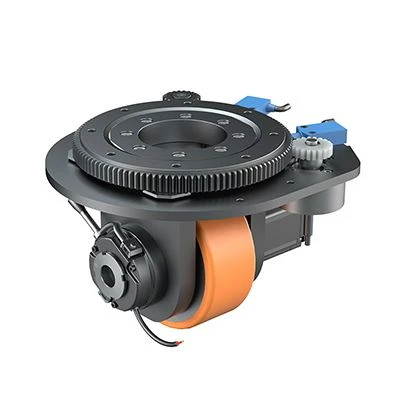
PLT-210 is rated for heavier AGV and forklift-type drive applications.
Problem Definition: Payload Rating Is Only One Part of Drive Wheel Selection
A frequent confusion in AGV drive wheel selection is comparing two models only by their maximum load number. In the Plutools range, PLT-120 and PLT-210 belong to different load and architecture classes. PLT-120 carries a drive wheel load rating of 150 kg, while PLT-210 carries a maximum load rating of 1,200 kg. These ratings should not be treated as interchangeable.
Before choosing a model, the evaluation team should define four requirements:
- The load that each drive point must support after the vehicle body, battery, lifting mechanism and payload are distributed across the wheels.
- The steering method used by the vehicle: differential speed steering, steered drive wheel, or a combination.
- The torque needed for acceleration, ramp climbing, braking and continuous operation.
- The chassis height, mounting envelope and environmental protection required by the application.
This is why a PLT-120 vs PLT-210 comparison is not simply about picking the higher specification. It is about matching the drive module to the vehicle architecture.
Industry Background: Payload-Specific AGV Drive Units Are Becoming the Default
AGV and AMR programs now cover a wide range of vehicle sizes, from small autonomous transport robots to heavy-duty automated forklifts. Market research from Reports and Data estimates that the global AGV wheel drives market was valued at approximately USD 1.2 billion in 2024 and is projected to reach USD 3.5 billion by 2034. The same research points to a compound annual growth rate of 11.5% over that period. MarketsandMarkets also identifies industrial logistics as one of the fastest-growing AGV application segments, with a projected CAGR of 11.6%.
As vehicle programs become more specialised, drive modules are increasingly designed around payload class and steering integration rather than generic motor capacity. A compact differential drive wheel such as the PLT-120 and a heavier horizontal drive wheel with steering such as the PLT-210 can both operate from a 48 V system, yet they are built for different duty cycles.
Detailed Solution: PLT-120 vs PLT-210 by Load, Torque and Structure
PLT-120: Differential Drive Wheel for Compact, Lower-Load Platforms
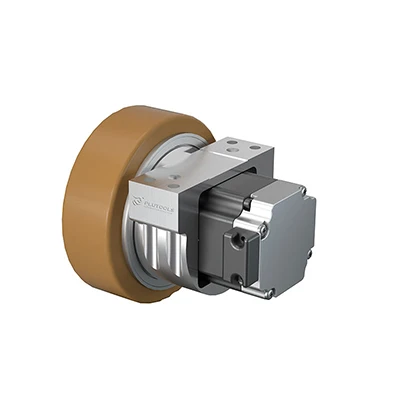
PLT-120 is specified as a differential drive wheel for lighter AGV and AMR platforms.
PLT-120 is listed by Plutools as a Differential Drive Wheel. It uses a 48 V electrical system with 400 W rated power and an 11.2 A rated current. Its rated speed is 3,000 rpm, and its rated motor torque is 1.28 Nm.
The PLT-120 has two transmission ratio options, 9 and 20. Depending on the ratio, the rated output torque is 10 Nm or 21 Nm, and the maximum acceleration and braking torque is 20 Nm or 42 Nm. The published drive wheel load is 150 kg, and the IP protection level is IP65. The unit is built with carbon steel and uses a PU wheel tread, which supports low noise and wear resistance in floor-contact applications.
For an AGV or AMR vehicle that uses dual-wheel differential steering, the PLT-120 represents a compact drive candidate. Because the total vehicle load is normally shared by more than one wheel, the 150 kg drive wheel load must be evaluated together with the vehicle's wheel layout, suspension and load distribution.
PLT-210: Parallel Horizontal Drive Wheel with Steering for Heavy Loads
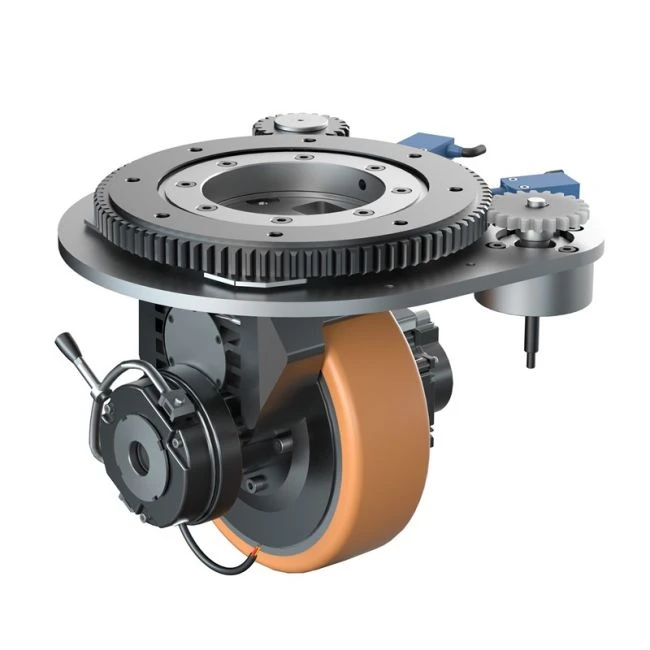
PLT-210 is described by Plutools as a Forklift Drive Wheel with a parallel horizontal steering configuration.
PLT-210 belongs to a different load class. Plutools lists it as a Forklift Drive Wheel and describes the configuration as a Parallel Horizontal Drive Wheel with Steering. The electrical specification is 48 V with 3,000 W rated power and a 68 A rated current. The motor rated torque is 9.55 Nm at 3,000 rpm.
PLT-210 uses a reduction ratio of 32 and provides an output torque of 260 Nm. Its maximum torque is 576 Nm, and its maximum load is 1,200 kg. The unit is made with carbon steel and uses a PU wheel tread, consistent with the floor protection and wear requirements of heavier indoor vehicles.
The horizontal arrangement is especially relevant for vehicles where a lower drive module improves the centre of gravity and chassis stability. A horizontal drive wheel configuration generally allows the vehicle to use a lower mount profile than a tall vertical drive stack, which can help heavy-load AGVs and forklift-type platforms remain stable during turning and high-speed operation.
Structural Configuration Matters When Payload Is High
The structural difference between the two models is more important than the numerical gap in motor power. PLT-120 is a differential drive wheel. In a vehicle that uses differential drive, two wheels are driven at different speeds to create the turning motion. This configuration is widely used in compact mobile robots and warehouse AMRs where the vehicle can be controlled with simpler drive kinematics.
PLT-210 is a parallel horizontal drive wheel with steering. It is designed for vehicles that require each drive point to support a higher load and to provide a controlled steering action. Heavy warehouse transport vehicles, automated forklifts and AGVs that carry pallet-level payloads typically need this type of integrated steering drive architecture.
In a PLT-120 vs PLT-210 evaluation, the buyer should therefore ask whether the vehicle will steer by differential wheel speed or by a steered drive module. This question often removes more uncertainty than comparing rated torque figures alone.
Step-by-Step: Selecting Between PLT-120 and PLT-210
Step 1: Calculate the load per drive wheel
The specification table for PLT-120 states a drive wheel load of 150 kg. PLT-210 states a maximum load of 1,200 kg. The vehicle engineer should determine how much of the total AGV weight is transferred to each drive point during the worst loading case, including payload, lifting actions and dynamic load transfer. A heavy AGV with a 1,200 kg load class should evaluate PLT-210; a small AMR with a much lower per-wheel load may not need PLT-210 at all.
Step 2: Define the steering architecture
For dual-wheel differential steering, PLT-120 is the relevant candidate because it is specified as a differential drive wheel. For a vehicle with an individual steering function on the drive wheel, PLT-210 is relevant because it is specified as a parallel horizontal drive wheel with steering. Review the vehicle control system, steering geometry and turn radius before fixing the model.
Step 3: Check output torque against acceleration and ramp demands
PLT-120 provides rated output torque of 10 Nm or 21 Nm depending on transmission ratio, and maximum acceleration and braking torque of 20 Nm or 42 Nm. PLT-210 provides output torque of 260 Nm and maximum torque of 576 Nm. The correct comparison is not about which number is higher; it is about whether the drive torque matches the vehicle mass, acceleration profile, floor friction and ramp angle.
Step 4: Evaluate chassis height and integration space
The structure of PLT-210 is horizontal, which may support a lower drive-unit profile and a lower centre of gravity. PLT-120, as a differential drive wheel, is suited to a compact dual-wheel drive layout. The mounting envelope, wheelbase and available chassis height should be checked against the drawing and sample dimensions during evaluation.
Step 5: Confirm protection, mounting and OEM customization options
PLT-120 has an IP65 protection level. PLT-210 does not publish an IP rating in the available product specification, so the integrator should confirm environmental protection with the manufacturer. In addition, Plutools can customise load capacity, wheel diameter, motor power, voltage, rated speed, reduction ratio, mounting dimensions, encoder type, brake system, connector, cable length, logo and packaging for OEM programs.
Use Cases: Which Program Should Look at Which Model
Evaluation focus: PLT-120
- Light-duty AGVs and AMRs that use differential steering.
- Compact mobile platforms where the per-drive-wheel load is within the 150 kg drive wheel load rating.
- Vehicles operating in indoor factory or warehouse environments where IP65-rated drive units are required.
- AGV development projects that need a shorter integration cycle and a dual-wheel differential drive architecture.
Evaluation focus: PLT-210
- AGVs that carry heavier payloads and rely on a steered horizontal drive wheel.
- Automated forklift programs and forklift-type drive applications.
- Heavy material transport tasks where 48 V operation, 260 Nm output torque and 576 Nm maximum torque are useful design margins.
- Vehicles where a lower horizontal drive profile and integrated steering function simplify the chassis layout.
PLT-120 vs PLT-210 Specification Comparison
The following table compares the published specifications of the two drive wheels. Where a value is not present in the available product data, the table uses a dash.
| Specification / role | PLT-120 | PLT-210 |
|---|---|---|
| Product name / type | Differential Drive Wheel | Forklift Drive Wheel; Parallel Horizontal Drive Wheel with Steering |
| Rated voltage | 48 V | 48 V |
| Rated power | 400 W | 3,000 W |
| Rated current | 11.2 A | 68 A |
| Rated speed | 3,000 rpm | 3,000 rpm |
| Rated motor torque | 1.28 Nm | 9.55 Nm |
| Transmission / reduction ratio | 9 and 20 | 32 |
| Output torque | 10 Nm or 21 Nm rated output torque | 260 Nm output torque |
| Maximum torque | 20 Nm or 42 Nm maximum acceleration and braking torque | 576 Nm maximum torque |
| Load rating | 150 kg drive wheel load | 1,200 kg maximum load |
| IP protection level | IP65 | - |
| Material | Carbon steel | Carbon steel |
| Typical evaluation direction | Compact AGV / AMR with differential steering | Heavier AGV / automated forklift with steering |
Do not treat the torque rows as equivalent metrics. PLT-120 publishes rated output torque and maximum acceleration and braking torque, while PLT-210 publishes output torque and maximum torque. The load ratings also use different wording in the original specifications: PLT-120 uses drive wheel load, and PLT-210 uses maximum load. Both labels should be reviewed against the target vehicle layout.
Frequently Asked Questions
What is the main difference between PLT-120 and PLT-210 for AGV drive selection?
PLT-120 is a differential drive wheel with a drive wheel load rating of 150 kg. PLT-210 is a parallel horizontal drive wheel with steering and a maximum load rating of 1,200 kg. The two models differ in load capacity, output torque and structural configuration. PLT-120 is the relevant starting point for compact differential-drive AGV and AMR programs; PLT-210 is the relevant starting point for heavier AGV and forklift-type drive applications.
Which drive wheel should I consider for a 1,200 kg AGV payload?
For a 1,200 kg AGV payload class, PLT-210 is the model to evaluate first. PLT-210 is rated for a maximum load of 1,200 kg, uses a 48 V system, provides 3,000 W rated power, and delivers 260 Nm output torque with 576 Nm maximum torque. PLT-120 is not designed for that load level because its published drive wheel load is 150 kg. The integrator should still verify the total vehicle weight distribution because the final load on each drive point depends on the number of wheels and the vehicle layout.
Does PLT-210 provide more torque than PLT-120?
Yes. PLT-210 provides output torque of 260 Nm and maximum torque of 576 Nm. PLT-120 provides rated output torque of 10 Nm or 21 Nm depending on the transmission ratio, and maximum acceleration and braking torque of 20 Nm or 42 Nm. PLT-210 is therefore intended for heavier vehicles and applications with higher acceleration, ramp and braking loads.
Is PLT-120 suitable for automated forklift applications?
The PLT-120 is specified as a differential drive wheel with a drive wheel load of 150 kg, so it is not the model that Plutools classifies for forklift-type duty. PLT-210 is the model listed as a Forklift Drive Wheel with a parallel horizontal configuration and steering. For automated forklift evaluation, PLT-210 is the relevant model to assess alongside the vehicle's actual drive mounting, load distribution and steering requirements.
Can I get samples or custom specifications before a production order?
Plutools operates as a factory and supports OEM, ODM, custom manufacturing, sample development, and production runs from small to large batches. The monthly production capacity is 12,000 units, the MOQ is 2 units, and normal lead time is 30 to 45 days. Custom options include load capacity, wheel diameter, motor power, voltage, rated speed, reduction ratio, mounting dimensions, encoder type, brake system, connector, cable length, logo and packaging. Every unit is tested before delivery, and remote technical support is available. If you are comparing PLT-120 and PLT-210 for a new AGV or AMR program, a good next step is to send the vehicle payload, wheel layout and operating profile to Plutools for a specification review.
Conclusion and Next Step
The PLT-120 and PLT-210 comparison is best understood as a load-class and architecture decision. PLT-120 is a 150 kg differential drive wheel for compact AGV and AMR platforms that steer by differential speed. PLT-210 is a 1,200 kg parallel horizontal drive wheel with steering for heavier vehicles, including forklift-type AGVs.
When preparing the evaluation, collect four inputs: the maximum load per drive point, the steering concept, the torque required for the worst operating condition, and the chassis space available for the drive module. This information will make the PLT-120 vs PLT-210 decision much clearer than comparing model names alone.
Get specification support from Plutools. For a drive wheel selection review or sample request, contact Eric.Tang: Eric.Tang@plutools.com, Tel/WhatsApp +86 159-8958-6580. You can also download the Plutools drive wheel selection guide (PDF) or visit www.plutools.com for the full product range.
Have Questions or Need More Details?
Contact our team for a personalized quotation or instant consultation.
Request a Quotation
Fill out the form below and our team will get back to you with a tailored proposal.
WhatsApp Direct Chat
Prefer to chat in real-time? Message us on WhatsApp for instant assistance & quick answers.
- Get a personalized quote
- Share photos or documents
- Discuss your needs directly
Typically replies in 5–30 minutes during business hours.