
The Drive Wheel Behind Mobile Robots: Types, Specs, and Supplier Checks
The Drive Wheel Behind Mobile Robots: Types, Specs, and Supplier Checks
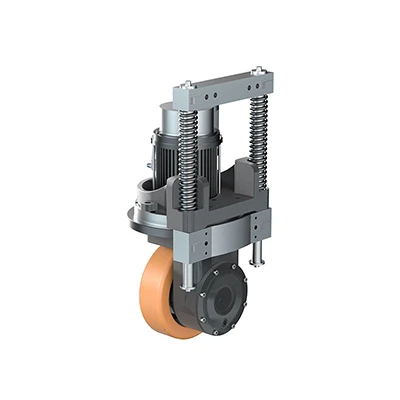
A drive wheel integrates motor, gearbox, steering, and wheel into one module. Shown: Plutools PLT-230P.
A drive wheel is not just a rubber tire attached to a motor. It is an integrated drive module that combines a motor, gearbox, wheel, steering mechanism, and sometimes braking into one package. In AGVs, AMRs, automated forklifts, and other mobile robots, the drive wheel is the component that converts motor power into stable movement: forward, reverse, turning, stopping, and precise positioning.
This article is a practical introduction to drive wheels for buyers who are entering the AGV drive wheel supplier market. It explains the main drive wheel types, the specifications that matter, how to compare options, and what to verify before making a sourcing decision.
Why Drive Wheel Selection Can Be Confusing
Drive wheel catalogs use different names for similar products. A buyer may see "vertical drive wheel," "horizontal drive wheel," "parallel horizontal drive wheel," "AGV drive wheel unit," and "differential drive wheel." These names describe real differences in structure and installation, but they are not always used consistently across suppliers.
The same project can often be served by more than one drive wheel configuration. For example, a low-profile AMR may use a horizontal drive wheel, while a heavy-duty AGV with limited horizontal space may use a vertical drive wheel. Because the final choice depends on chassis layout, load, speed, torque, and maintenance access, buyers need to compare specifications rather than product names.
Drive Wheel Market Context
The global AGV Wheel Drives market was valued at approximately USD 1.2 billion in 2024 and is projected to reach USD 3.5 billion by 2034, according to Reports and Data. The same source expects the market to grow at a CAGR of 11.5% from 2024 to 2034, driven by logistics and warehouse automation.
Grand View Research estimates the global automated guided vehicle market at USD 5.9 billion by 2025, with Asia Pacific holding a 37.6% revenue share. MarketsandMarkets reports that electric forklifts now account for over 70% of forklift sales in many regions. For drive wheel suppliers, this means more demand for integrated electric drive systems that can be built into compact AGV and AMR chassis.
Drive Wheel Types: What Suppliers Actually Mean
When you evaluate AGV drive wheel suppliers, you will usually find three structural families: vertical drive wheels, horizontal drive wheels, and differential drive wheels. Within these families, suppliers may offer steering and non-steering versions. This section explains what each type means and how to match it to a vehicle.
Vertical Drive Wheels
A vertical drive wheel has the motor and gearbox arranged vertically. This arrangement helps reduce the horizontal footprint of the drive unit, making it easier to install in a narrow chassis. Vertical drive wheels are often used when the vehicle needs a compact structure and a high load capacity.
Representative examples from Plutools include:
- PLT-230: vertical drive wheel without steering, 24 V, 1500 W, output torque 108 Nm, max torque 300 Nm, max load 1500 kg.
- PLT-150: vertical drive wheel with steering, 48 V, 750 W, output torque 108 Nm, max torque 114 Nm, max load 500 kg.
- PLT-230P: vertical drive wheel with shock absorption, servo motor control, 48 V, 2500 W, IP65, load 1200 kg, steering integrated.
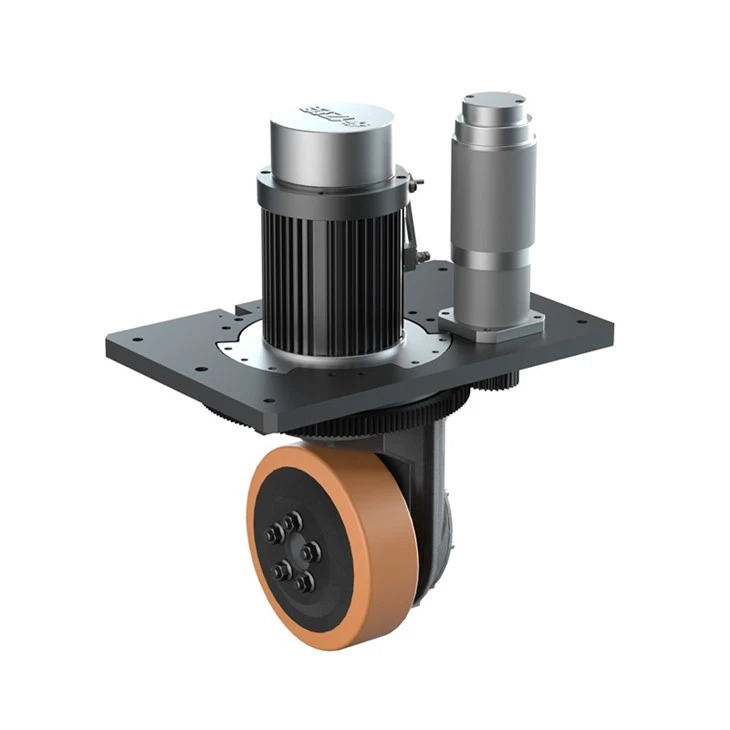
Vertical drive wheels can be specified with or without steering. Shown: Plutools PLT-150.
Horizontal Drive Wheels
A horizontal drive wheel keeps the motor and gearbox in a horizontal plane. This arrangement can reduce the overall height of the drive module and lower the vehicle's center of gravity. It is often used in low-profile AGVs, warehouse AMRs, and compact material-handling vehicles.
Representative examples include:
- PLT-167: AGV drive wheel unit, horizontal drive wheel without steering, 48 V, 750 W, output torque 40 Nm, max torque 120 Nm, max load 800 kg.
- PLT-198: planetary horizontal drive wheel with steering, 48 V, 3000 W, output torque 260 Nm, max torque 576 Nm, max load 1500 kg.
- PLT-220: parallel horizontal drive wheel with steering, 48 V, 750 W, output torque 58 Nm, max torque 174 Nm, max load 1000 kg.
- PLT-210: forklift drive wheel, parallel horizontal drive wheel with steering, 48 V, 3000 W, output torque 260 Nm, max torque 576 Nm, max load 1200 kg.

Horizontal drive wheels are common in low-profile AGV and AMR designs. Shown: Plutools PLT-220.
Differential Drive Wheels
A differential drive wheel uses an integrated steering control and a compact structure. It is designed for AGV and AMR scenarios where space is limited and maneuverability is important. Differential configurations can support tight turning, and dual differential layouts are common in smaller logistics robots.
PLT-120 is a differential drive wheel from Plutools: 48 V, 400 W, rated speed 3000 RPM, rated torque 1.28 Nm, IP65, wheel load 150 kg, and total weight 5 ± 2 kg. It includes integrated steering control.
Steering and Non-Steering Drive Wheels
Some drive wheels include a steering mechanism; others do not. A steering drive wheel can rotate the wheel around a vertical axis, allowing direction changes without additional steering parts. A non-steering drive wheel is usually used in fixed-drive positions, where the vehicle controls direction through differential speed, additional steering wheels, or multi-wheel coordination.
Industry reports also note that integrated steering drive modules are replacing discrete components to reduce manufacturer assembly time and maintenance complexity. Depending on the vehicle control system, drive wheels can operate in single-wheel drive, dual-wheel differential drive, steering drive, or multi-wheel coordinated drive modes.
Materials and Tread
Most of the Plutools drive wheels listed above use carbon steel for structural parts and polyurethane (PU) for the wheel tread. PU is commonly used for forklift and indoor industrial drive wheels because it combines load capacity with floor protection.
A Step-by-Step Drive Wheel Spec Review
Use the following sequence when you receive a drive wheel datasheet or quote. This sequence helps avoid comparing products that only look similar.
- Define maximum load. Start with the vehicle weight, payload, and expected dynamic load. The drive wheel's maximum load rating must cover all operating conditions, not just the empty vehicle.
- Choose drive layout. If the chassis is compact in horizontal space but has enough height, a vertical drive wheel is often the practical choice. If the vehicle needs a low profile and a low center of gravity, a horizontal drive wheel is usually better.
- Decide steering behavior. Confirm whether the drive wheel itself must steer. Some AGVs use steering drive wheels, while others use non-steering wheels combined with differential control or additional steering mechanisms.
- Check electrical compatibility. Compare rated voltage, current, power, and speed with the vehicle's battery, controller, and motor driver. A mismatch at this stage creates integration delays.
- Check torque and reduction. Look at rated torque, output torque, maximum torque, and reduction ratio. These values determine whether the vehicle can accelerate, climb ramps, and stop safely under load.
- Confirm environment. Check whether the drive wheel needs IP-rated protection, low-temperature capability, dust resistance, or special floor compatibility. Drive wheels may need to work on concrete, epoxy, steel, or slightly uneven floors, and special versions can be designed for cold storage, high-humidity areas, cleanrooms, and dusty workshops.
- Verify supplier depth. Review the supplier's facility, engineering team, production capacity, export experience, and ability to customize load and speed options. Documentation and sample support are part of supplier depth.
Manufacturing depth matters when suppliers need to support customized AGV drive wheel programs.
Common Use Cases
AGV Material Handling
AGVs used in warehouses and production lines need predictable speed, torque, and stopping behavior. Models such as PLT-167 or PLT-230 can be paired with vehicle controllers, encoders, and safety systems for route-based transport.
AMR and Mobile Robots
AMRs often operate in dynamic environments with narrow aisles and frequent stops. The PLT-230P vertical drive wheel with shock absorption is designed for AGV and AMR drive scenarios. Its servo motor control supports integration with sensor-based navigation. The PLT-120 is another compact option for lighter robots.
Automated Forklifts
Forklifts require higher torque and load capacity in a compact chassis. The PLT-210 forklift drive wheel, a parallel horizontal drive wheel with steering, is built around 48 V and 3000 W with a maximum load of 1200 kg.
Heavy-Duty Transfer Applications
For heavier transfer platforms, the PLT-198 provides a maximum load of 1500 kg. Typical applications include pallet transportation, production-line transfer, finished-product handling, and airport baggage transport.
Drive Wheel Comparison: Vertical vs Horizontal vs Differential
| Factor | Vertical Drive Wheel | Horizontal Drive Wheel | Differential Drive Wheel |
|---|---|---|---|
| Layout | Motor and gearbox arranged vertically | Motor and gearbox arranged horizontally | Integrated compact steering unit |
| Typical strength | Compact horizontal footprint, strong load capability | Lower vehicle height and lower center of gravity | Easy integration in tight spaces, integrated steering |
| Steering | Available with or without steering | Available with or without steering | Integrated steering control |
| Representative Plutools models | PLT-230, PLT-150, PLT-230P | PLT-167, PLT-198, PLT-220, PLT-210 | PLT-120 |
| Example max load range | 500–1500 kg | 800–1500 kg | 150 kg |
| Best fit | Heavy-duty AGVs, automated forklifts, lifting vehicles, limited horizontal space | Low-profile AGVs, warehouse AMRs, latent lifting robots, stable high-speed travel | Small logistics robots, compact AGV/AMR platforms, tight turning |
Representative data based on Plutools PLT series specifications. Choose based on vehicle layout and operating requirements.
FAQ: AGV Drive Wheel Supplier Questions
What compliance documents should an AGV drive wheel supplier provide?
Ask whether the supplier can provide documentation related to ISO 3691-4:2023, EN 1175:2020, and ANSI/ITSDF B56.5. These are recognized standards for driverless industrial trucks, electrical and electronic safety of industrial trucks, and driverless industrial vehicle safety. Drive wheel compliance is only one part of vehicle-level safety; the integrator should still design the full control and safety system according to the vehicle's intended use.
What manufacturing capabilities should I verify in an AGV drive wheel supplier?
Check the supplier's manufacturing facts, not just the website. A useful example is Shanghai Plutools Automation Corporation Co., Ltd., established in 2017, headquartered in Shanghai, with a 10,000 m² facility, around 100 employees, an R&D team of 60 engineers, and an annual production capacity of 10,000 units. The company also states more than 200 patent technology certifications and exports about 70% of its output to the EU, USA, Southeast Asia, South America, the Middle East, Japan, and South Korea.
How should I evaluate drive wheel cost?
Drive wheel pricing depends on structure, load, steering, IP rating, and customization. Do not compare prices without matching specifications. Request a quote based on rated voltage, current, power, output torque, reduction ratio, mounting dimensions, and environmental needs. Consider integration time and likely maintenance as part of total cost.
Can I request drive wheel samples?
After you define load, chassis space, voltage, and control method, ask the supplier whether samples are available and what information they need to prepare the sample. For Plutools inquiries, contact Eric.Tang at Eric.Tang@plutools.com or +86 15989586580. A downloadable catalog can help start the discussion.
What lead time should I expect for custom drive wheels?
Lead time depends on whether the drive wheel is a standard model or a customized unit. Custom wheel diameter, reduction ratio, encoder type, communication protocol, or braking method can require extra design and testing. Share your final specification early and ask for written lead time. A good next step is to send your specification to the supplier with a clear request for current lead times.
Final Takeaway
Drive wheel selection becomes easier when you break it into decisions: load, chassis layout, steering, electrical compatibility, torque, environment, and supplier capability. A reliable AGV drive wheel supplier should be able to explain these points in relation to your vehicle, not just send a generic datasheet.
If you are evaluating drive wheels for an AGV, AMR, or forklift program, download the Plutools Drive Wheel Selection Catalog or contact Eric.Tang at Eric.Tang@plutools.com / +86 15989586580. Including your vehicle type, maximum load, rated voltage, and chassis space will help the conversation move faster.
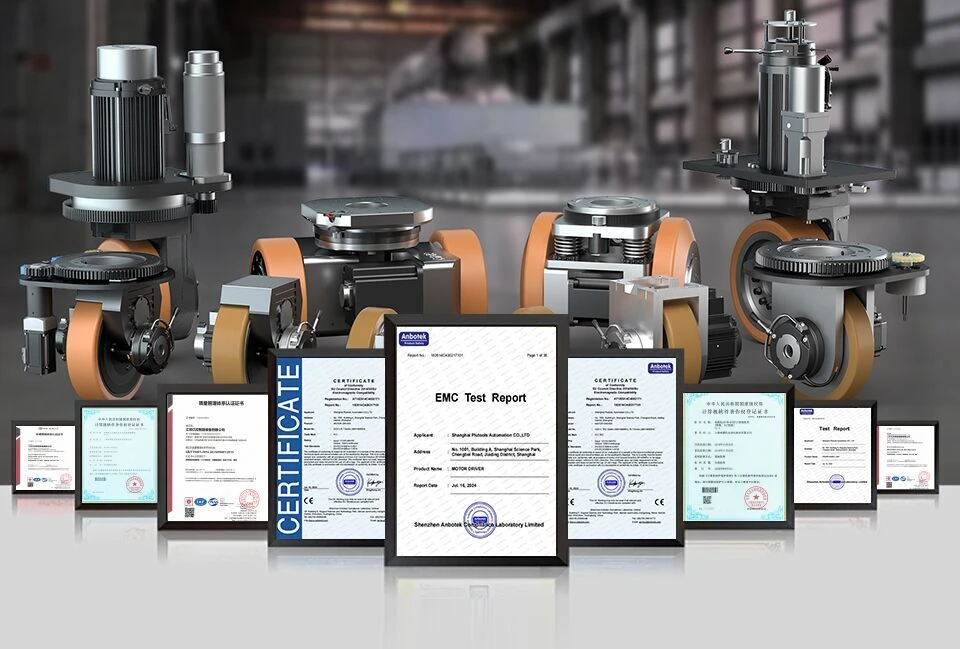
Ask suppliers which product and vehicle-level standards apply to your drive wheel integration.
Have Questions or Need More Details?
Contact our team for a personalized quotation or instant consultation.
Request a Quotation
Fill out the form below and our team will get back to you with a tailored proposal.
WhatsApp Direct Chat
Prefer to chat in real-time? Message us on WhatsApp for instant assistance & quick answers.
- Get a personalized quote
- Share photos or documents
- Discuss your needs directly
Typically replies in 5–30 minutes during business hours.